
October 23, 2026
A practical guide for founders and small teams on building a simple, AI assisted support system without hiring a dedicated support department.
Anablock is a technology and AI systems company helping businesses automate workflows, connect tools, improve lead handling, and build smarter digital growth systems. The Anablock team writes about AI implementation, automation, CRM, lead generation, SEO/AEO, and practical ways businesses can use technology to operate better and grow.
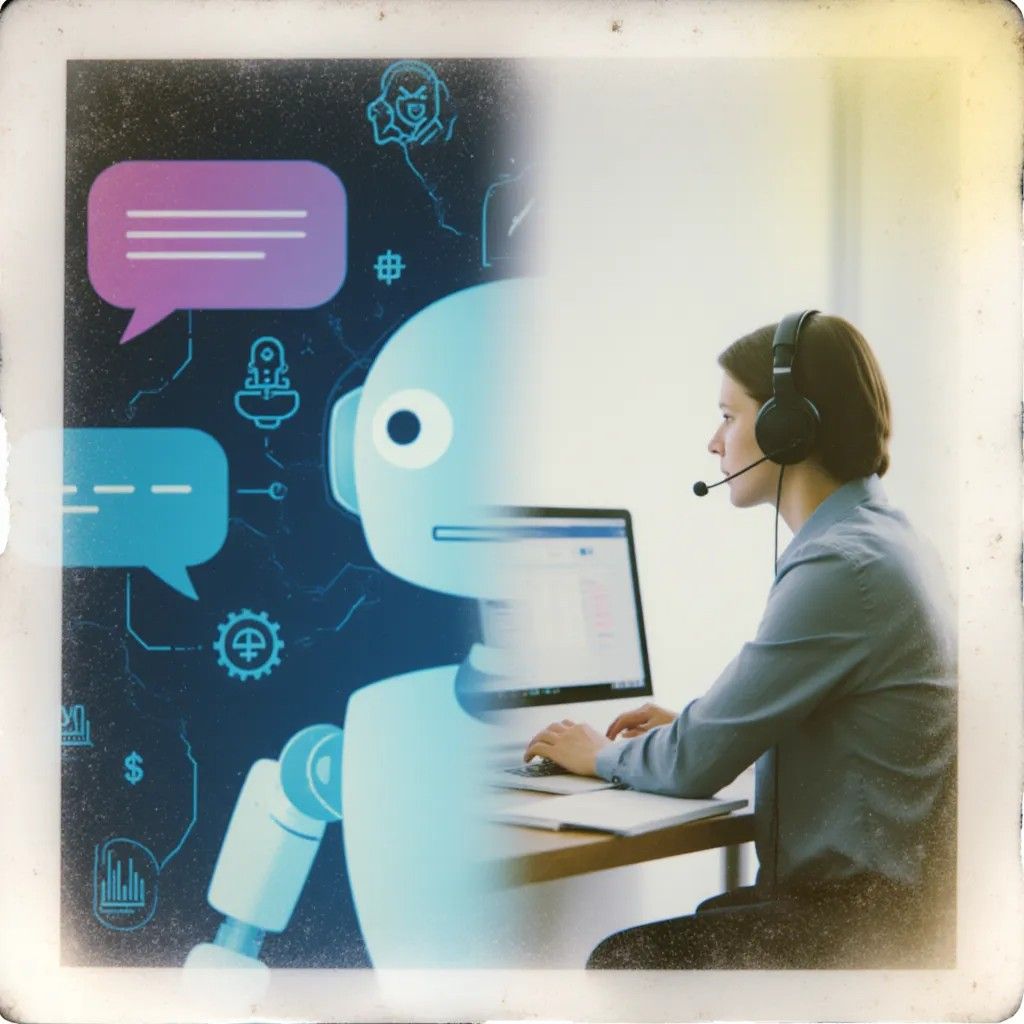
Most companies know customer support is expensive. What is less obvious is exactly where that cost comes from and how much of it is tied to work that does not actually require a human.
When you compare AI chatbots vs live agents, it is tempting to say AI is cheaper and stop there. A real cost analysis goes deeper. It looks at efficiency, scalability, and long term value for both the business and the customer.
For growing companies, this is not theoretical. It is a budget level decision. How do you support more customers, across more channels, with faster response times, without scaling your support team linearly with ticket volume.
On the surface, live agents appear to be a simple line item. Salary and benefits. In reality, the true cost of a human support team is made up of multiple visible and hidden expenses.
There is the direct labor cost of each agent, including salary, overtime, bonuses, and benefits. Behind every agent, there is also a pipeline of hiring, onboarding, and training costs that repeat every time you grow or replace staff.
Then there is the cost of managing the operation. Support teams require leads and supervisors for quality control, coaching, escalations, and scheduling. These roles are essential, but they do not directly resolve tickets.
There is also infrastructure to consider:
On top of that, humans have a natural capacity limit. Each agent can only handle a certain number of chats, emails, or calls at one time.
When support volume spikes, you are forced to make a tradeoff:
Either option impacts support efficiency and increases cost per conversation.
AI chatbots fundamentally change how support costs scale.
Instead of paying per head and per hour, the primary costs are platform licensing, infrastructure, and usage. Once deployed, a chatbot can handle hundreds or thousands of conversations with minimal additional cost.
Several things shift immediately in the chatbot vs live agents comparison.
After implementation, handling more conversations does not require additional hires.
There are no night shifts, weekends, or holiday premiums.
Password resets, order status updates, basic account questions, and simple how to requests no longer consume human time.
As support volume grows, chatbot costs tend to flatten instead of rising. You are no longer forced to hire in lockstep with customer growth just to maintain response times.
Cost alone is not the full story. Support efficiency is about the value created by each interaction.
AI chatbots are efficient because they:
This makes them ideal for predictable and transactional tasks.
Live agents excel in situations that require judgment, nuance, and empathy. They understand tone, manage exceptions, and resolve complex issues that current AI cannot fully handle.
From a cost analysis perspective, the strategy becomes clear.
Use AI chatbots for repetitive, low complexity interactions. Reserve live agents for high value, high impact conversations.
This does not just reduce cost. It improves how human time and expertise are used.
Scalability is where the difference between AI chatbots and live agents becomes most obvious.
When your customer base grows and you rely only on live agents, you usually need to:
Each increase in volume comes with new headcount or a quality tradeoff.
With a chatbot as the first layer, the picture changes.
A well designed AI assistant can:
This is true scalability. More customers and more conversations without linear cost growth.
In practice, most effective teams do not choose bots only or humans only. They build a hybrid model.
A typical hybrid support flow looks like this:
This changes the cost structure in meaningful ways:
The result is a lower average cost per resolution and a better experience for customers and support teams alike.
At Anablock, we treat chatbot vs live agents as a design and optimization problem, not a tool decision.
A typical engagement starts with an analysis of your existing support data:
From there, we identify automation opportunities and estimate the impact of:
We design a phased rollout where the chatbot starts with high confidence use cases and expands over time as performance and satisfaction data improve.
Because our assistants integrate with your existing help desk, CRM, and messaging tools, you add an automation layer without rebuilding your stack.
If you compare raw cost per interaction, AI chatbots win. They scale efficiently, operate continuously, and reduce cost per conversation as volume increases.
When you look at overall value, the real winner is the combination of AI chatbots and live agents working together.
Chatbots deliver speed and scale. Humans deliver empathy and judgment.
A smart cost analysis does not replace one with the other. It finds the balance that delivers reliable support at a sustainable cost.
If you want to understand what that balance looks like using your own numbers, Anablock can help you model the impact and design a roadmap from initial automation to measurable savings and long term scalability.
Written by
AI Insights & Innovations
Anablock is a technology and AI systems company helping businesses automate workflows, connect tools, improve lead handling, and build smarter digital growth systems. The Anablock team writes about AI implementation, automation, CRM, lead generation, SEO/AEO, and practical ways businesses can use technology to operate better and grow.


If you are ready to move from research to implementation, we can help map the right AI system around your tools, data, team, and goals.