

November 12, 2026
Patients who say they will think about it are rarely saying no. Learn why they hesitate over cost, fear, and timing, and how respectful, AI-assisted follow-up improves dental case acceptance without pressure.
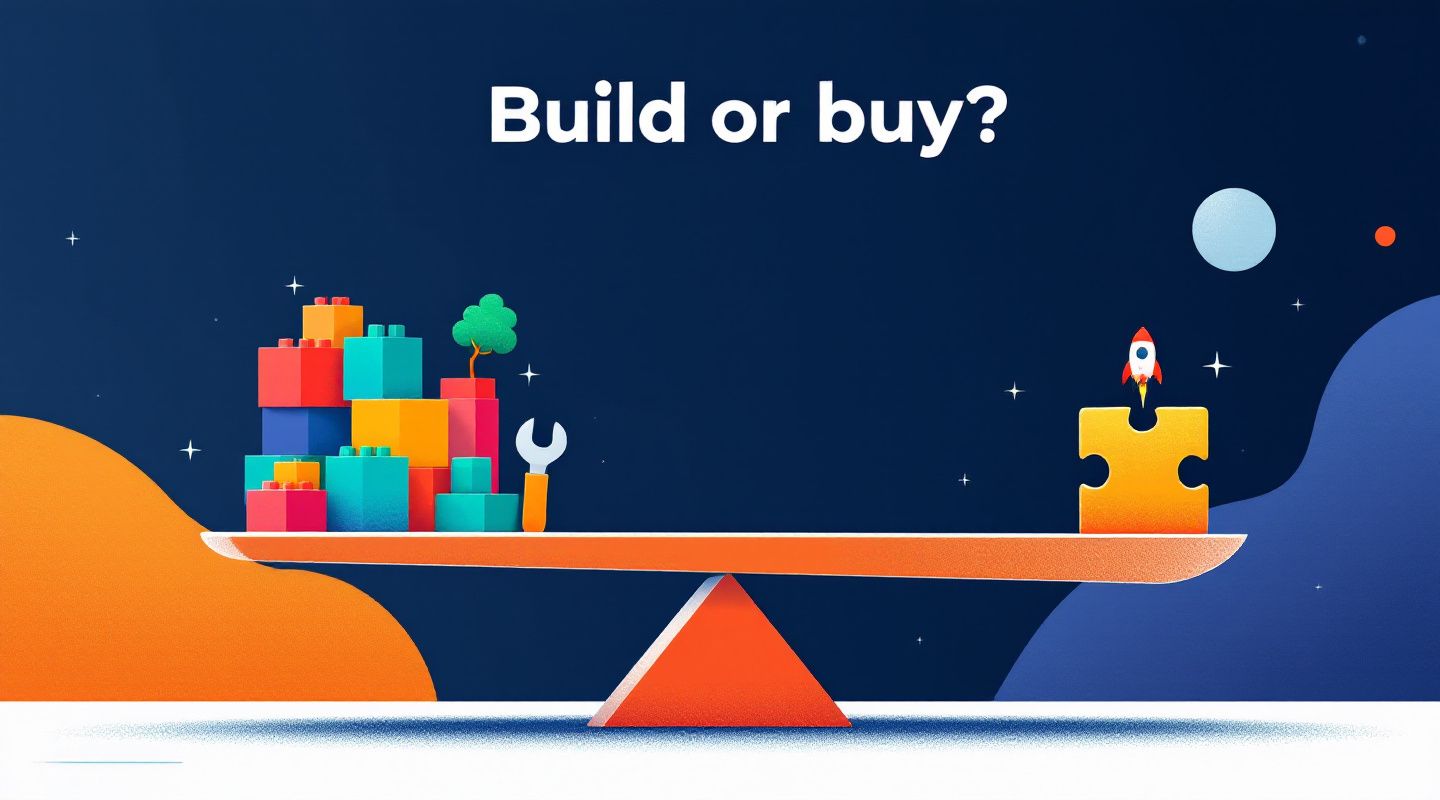
Every startup founder eventually hits this fork. You know an AI agent could take work off your team, whether that is answering customers, qualifying leads, or booking meetings. Now you have to decide: build it yourself, or buy a platform.
The honest answer is that neither path is always right. The build vs buy AI agent decision depends on your stage, your team, and what makes your product special. This guide gives you a simple decision matrix so you can choose with a clear head.
Build means your engineers design the agent from scratch. You pick the model, write the prompts and logic, connect your tools and data, and host it yourself.
Buy means you use an AI agent platform for startups that already handles the hard parts: hosting, integrations, monitoring, and a working interface. You configure it to your business instead of coding it.
There is also a middle road. Many teams buy a platform to launch fast, then build custom pieces where they need them. Keep that in mind as you read.
Here is how the two paths compare on the four factors that matter most to early teams.
| Factor | Build | Buy |
|---|---|---|
| Time to launch | Months for a reliable first version | Days to a few weeks |
| Maintenance | Your team owns every fix and upgrade | The vendor handles most of it |
| Control | Full control over behavior and data flow | Limited to what the platform allows |
| Cost | High upfront, ongoing engineering time | Predictable subscription, lower upfront |
Let's look at each one honestly.
A demo agent is easy to build in a weekend. A production agent is not. You also need error handling, fallbacks, escalation to humans, logging, security, and testing against real conversations. That is where the months go.
A platform gives you most of that on day one. For a startup racing to find product market fit, speed is often the deciding factor.
This is the cost most founders underestimate. Models change, APIs break, and edge cases show up every week. Someone has to watch quality, update prompts, and fix what drifts.
If you build, that someone is on your payroll, and they are not building your core product. If you buy, the vendor spreads that work across all their customers.
Building gives you the most flexibility. You decide exactly how the agent reasons, what it can access, and how data is stored. If your agent is your product, or you work in a heavily regulated space with strict data rules, this matters a lot.
A platform trades some of that flexibility for convenience. The question is whether you actually need the flexibility you are giving up. Many startups discover the answer is no.
Custom AI development cost varies widely with scope, but a production quality agent commonly runs into the tens of thousands of dollars before you count ongoing upkeep. Treat that as a rough range, not a quote.
Platforms usually charge a monthly fee, which is far easier to forecast. The tradeoff is that fees can grow with usage, so check how pricing scales before you commit.
The real comparison is not price against price. It is the total cost of ownership: engineering hours, hosting, model usage, monitoring, and the opportunity cost of what your team could have shipped instead.
Build when at least one of these is true:
Buy when most of these are true:
Ask yourself five questions:
If most answers point to "a tool that helps us sell," "no," and "nobody has time," buying is the smarter first move. You can always build custom components later, once you know what is worth owning.
For most startups, buying first is the lower risk path. You launch faster, learn from real customers, and keep your engineers focused on your core product. Building earns its place when the agent itself is your edge or your requirements are truly unique.
Anablock builds AI agents for customer support, sales, and lead generation, and also offers a platform approach through Anablock CRM, Ana, and Echo. That means we can speak honestly to both sides of this decision, and we will tell you if building is the better fit for you.
Not sure which path fits your startup? Book a call with Vuk and we will walk through your use case, your timeline, and your budget together.
Written by

If you are ready to move from research to implementation, we can help map the right AI system around your tools, data, team, and goals.